Policy Brief | July 29, 2025
Key Summary
- US and EU agree to 15% tariff on most European exports, down from threatened 30% escalation
- Deal saves European automotive sector from 25% duties but maintains substantial trade barriers
- Agreement represents fundamental departure from post-war transatlantic trade liberalisation
- Economic modelling suggests 0.3-0.7% European GDP contraction over next two years
- Precedent establishes bilateral trade management over multilateral frameworks, potentially undermining WTO authority
From Trade War Threats to Compromise
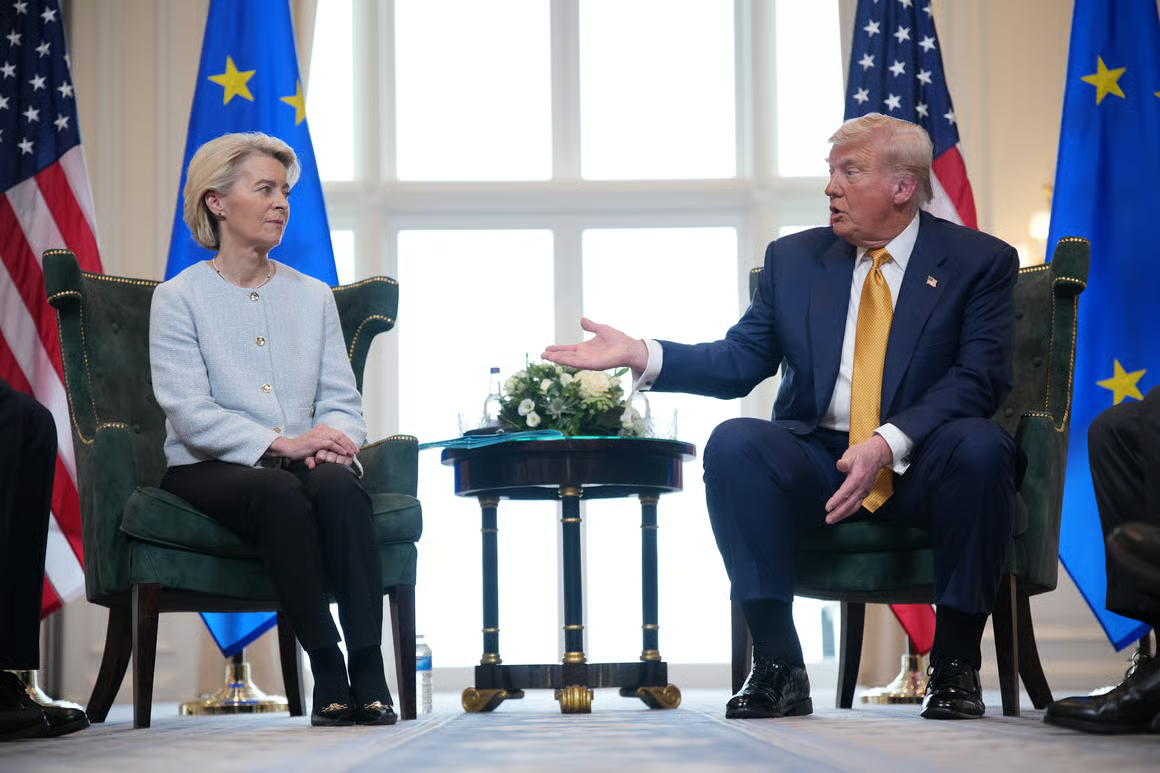
On July 27, 2025, President Trump and European Commission President Ursula von der Leyen finalised an agreement imposing 15% tariffs on most European exports to the United States. The deal emerged from escalating tensions that began with Trump’s threat of 30% duties on European goods, creating urgent diplomatic pressure for resolution.
The automotive sector received particular attention, with previous threats of 25% duties on top of existing 2.5% levies now replaced by the baseline 15% rate. While both sides characterise this as compromise, the agreement fundamentally alters decades of trade liberalisation between traditional allies. Strategic exemptions for aircraft, certain chemicals, and pharmaceuticals reflect recognition of integrated supply chains where tariffs would harm American interests as much as European ones.
Immediate Market Disruption
The 15% tariff structure creates immediate cost pressures across European export industries. German automotive manufacturers face direct margin compression that will likely translate into consumer price increases and potential market share losses. French luxury goods producers and Italian fashion houses confront similar challenges in the crucial American market.
Early economic modelling from the Peterson Institute suggests European GDP could contract by 0.3-0.7% over the next two years, with export-dependent economies like Germany and the Netherlands bearing disproportionate impacts. The German automotive association VDA estimates the tariffs could reduce vehicle exports to the US by 180,000 units annually, representing approximately €4.2 billion in lost revenue.
Sectoral Winners and Losers
The agreement’s carve-outs reveal strategic calculations. Boeing’s reliance on European suppliers made aircraft exemptions economically necessary rather than diplomatically generous. Similarly, the pharmaceutical sector’s complex manufacturing networks spanning both continents forced recognition that tariffs would fragment efficient production systems established over decades.
Conversely, the inclusion of automotive products at the 15% rate maintains pressure on European manufacturers to consider American production facilities. This may accelerate foreign direct investment – Volkswagen has already announced exploration of additional US capacity – but fragments production networks optimised for efficiency rather than trade policy.
Precedent for Bilateral Trade Management
This agreement establishes a concerning precedent for resolving trade disputes through managed protection rather than liberalisation. The acceptance of 15% as a “reasonable compromise” normalises tariff levels that would have been considered punitive just five years ago. Other trading partners may now view bilateral negotiations as more attractive than multilateral frameworks.
The deal’s structure suggests a fundamental shift toward bilateral trade management over multilateral institutions. This approach potentially undermines the World Trade Organisation’s dispute resolution mechanisms and the rules-based international order that has governed transatlantic commerce since 1945. Brazil and India have already signalled interest in similar bilateral arrangements with the United States.
Geopolitical Realignment Risks
The agreement occurs amid broader strategic competition with China and efforts to maintain democratic solidarity against authoritarian challenges. While avoiding immediate trade war escalation, the deal may weaken transatlantic unity precisely when strategic coordination becomes increasingly critical for addressing global challenges.
European policymakers face difficult questions about economic sovereignty versus alliance maintenance. The acceptance of American tariff terms, even at reduced levels, suggests limited European leverage in trade negotiations. This perceived weakness may encourage further American demands in future discussions on technology transfer, defence spending, or regulatory harmonisation.
Congressional Oversight Mechanisms
Congress should establish oversight mechanisms to monitor the tariff agreement’s economic impacts. Regular reporting requirements on consumer price effects, trade diversion patterns, and retaliatory measures would provide data for future policy adjustments. The Trade Promotion Authority framework could be modified to require periodic review of bilateral agreements exceeding certain tariff thresholds.
Legislative action could also address potential WTO compliance issues. The tariff agreement may violate most-favoured-nation principles unless properly structured under existing trade law exceptions. Congressional hearings should examine whether the deal requires formal trade agreement procedures or represents an abuse of executive authority.
European Strategic Response
European leaders should pursue strategic diversification of export markets to reduce dependence on American consumption. Accelerated trade agreements with Asian and African partners become essential, alongside domestic market development initiatives that reduce export vulnerability. The EU-Mercosur agreement, stalled for years, should receive renewed priority.
The European Union must also strengthen its retaliatory capacity through coordinated industrial policy and strategic autonomy initiatives. Building technological and economic capabilities that create mutual dependence rather than one-sided vulnerability becomes essential for future negotiating positions. The European Chips Act and Green Deal Industrial Plan represent steps in this direction.
Alternative Frameworks
Both sides should explore alternative frameworks for managing trade disputes that preserve alliance relationships while addressing legitimate economic concerns. Sectoral agreements focusing on specific industries – similar to the US-Japan semiconductor accord of the 1980s – might provide more targeted solutions than broad tariff increases.
International coordination through G7 and OECD frameworks could establish guidelines for “alliance-compatible” trade policies that address domestic political pressures without fragmenting democratic economic relationships. Such guidelines might include sunset clauses, automatic review mechanisms, and compensation funds for affected industries.
Comparative International Context
The tariff agreement contrasts sharply with European approaches to trade policy. The EU’s proposed 90% greenhouse gas reduction by 2040 includes carbon border adjustments that represent trade measures, but these are multilaterally negotiated and environmentally motivated rather than protectionist. The UK’s Global Britain strategy emphasises trade liberalisation through comprehensive partnerships with Indo-Pacific nations.
France has proposed “European economic sovereignty” measures that would screen foreign investments and protect strategic industries, but within EU frameworks that maintain internal market integration. This approach differs fundamentally from unilateral tariff imposition that fragments existing trade relationships.
Asian Strategic Calculations
The US-EU tariff agreement may accelerate Asian economic integration as regional powers seek alternatives to Western market volatility. The Regional Comprehensive Economic Partnership (RCEP) already represents the world’s largest trade bloc, and the US-EU dispute may encourage further Asian cooperation independent of Western trade networks.
China’s Belt and Road Initiative gains additional attractiveness when democratic allies impose trade barriers on each other. The tariff agreement inadvertently provides Chinese policymakers with evidence that Western economic leadership is fragmenting, potentially encouraging more assertive Chinese trade policies.
Long-Term Assessment and Risks
Current economic impact assessments may underestimate long-term costs of fragmenting transatlantic trade relationships. Static models capture immediate price and quantity effects but miss dynamic impacts on innovation, technology transfer, and supply chain resilience. Historical analysis of 1930s trade wars suggests that bilateral trade disputes often escalate into broader economic nationalism.
The agreement’s impact on small and medium enterprises remains particularly concerning. Large corporations can absorb tariff costs or relocate production, but smaller firms lack such flexibility. European SMEs that have built American market presence over decades may face existential challenges from the 15% tariff burden.
Political Sustainability Questions
The tariff agreement’s political sustainability depends on economic outcomes that remain uncertain. If consumer price increases exceed political benefits from protected industries, American voters may demand policy reversal. Similarly, if European export losses prove severe, EU member states may pressure for more aggressive retaliatory measures.
Democratic transitions in either region could rapidly alter trade policy approaches. The 2026 US midterm elections and potential European Parliament changes in 2029 create opportunities for reversal, but also risks of further escalation if political incentives favour more aggressive trade nationalism.
Immediate Policy Recommendations:
Altrom analysis finds the US-EU 15% tariff agreement represents a dangerous departure from successful post-war economic cooperation that has underpinned democratic prosperity and security. While avoiding immediate trade war escalation, the deal establishes precedents that may fragment the economic foundations of the Western alliance.
Sunset and Review Mechanisms: Both governments should establish automatic review processes with sunset clauses requiring positive action to maintain tariffs beyond 24 months. This prevents tariffs from becoming permanent features of the trade relationship and creates opportunities for reversal as economic impacts become clear.
Alliance Coordination: The G7 should establish guidelines for “alliance-compatible” trade policies that address domestic concerns without fragmenting democratic economic cooperation. Such guidelines should include dispute resolution mechanisms, compensation funds for affected industries, and coordination with multilateral institutions.
Economic Impact Monitoring: Congress and the European Parliament should mandate regular economic impact assessments measuring consumer costs, industrial competitiveness, and geopolitical effects. These assessments should inform future policy decisions and provide transparency for democratic accountability.
WTO Compliance Review: Both sides should work within World Trade Organisation frameworks to ensure the agreement complies with multilateral trade rules. If compliance proves impossible, alternative dispute resolution mechanisms should be developed that preserve both economic efficiency and political legitimacy.
Strategic Industry Protection: Rather than broad tariff increases, both regions should develop targeted industrial policies that strengthen strategic capabilities without fragmenting efficient trade relationships. The EU’s Green Deal Industrial Plan and US CHIPS Act represent better models for addressing economic security concerns.
Ultimately, Altrom emphasises that democratic alliances require economic integration to remain politically sustainable. The tariff agreement may provide short-term political benefits, but risks long-term damage to relationships essential for addressing global challenges from climate change to authoritarian expansion. Policymakers should view this agreement as a temporary accommodation requiring early reversal rather than a permanent feature of transatlantic relations.
The stakes extend beyond trade statistics to the fundamental question of whether democratic nations can maintain economic cooperation in an era of rising nationalism and strategic competition. Success in reversing this precedent may determine whether the Western alliance remains economically integrated enough to address 21st-century challenges effectively.
This analysis reflects ongoing research at Altrom Centre For Economic Policy on transatlantic economic relations and global trade governance. For additional research and policy recommendations, visit our trade policy research centre.