Key Summary
- First‑of‑Kind Project: A new Illinois natural gas plant will deliver 400 MW of continuous capacity with integrated carbon capture and storage.
- Emissions Reduction: Around 90% of CO₂ emissions will be captured and stored in an existing underground facility with capacity for 2 million metric tons annually.
- Timeline: Construction begins in 2026, with commercial operations expected by 2030.
- Strategic Significance: The project demonstrates how corporate energy demand can accelerate deployment of low‑carbon technologies.
- Policy Implications: CCS integration highlights the role of private investment in bridging energy security and climate goals.
Project Overview
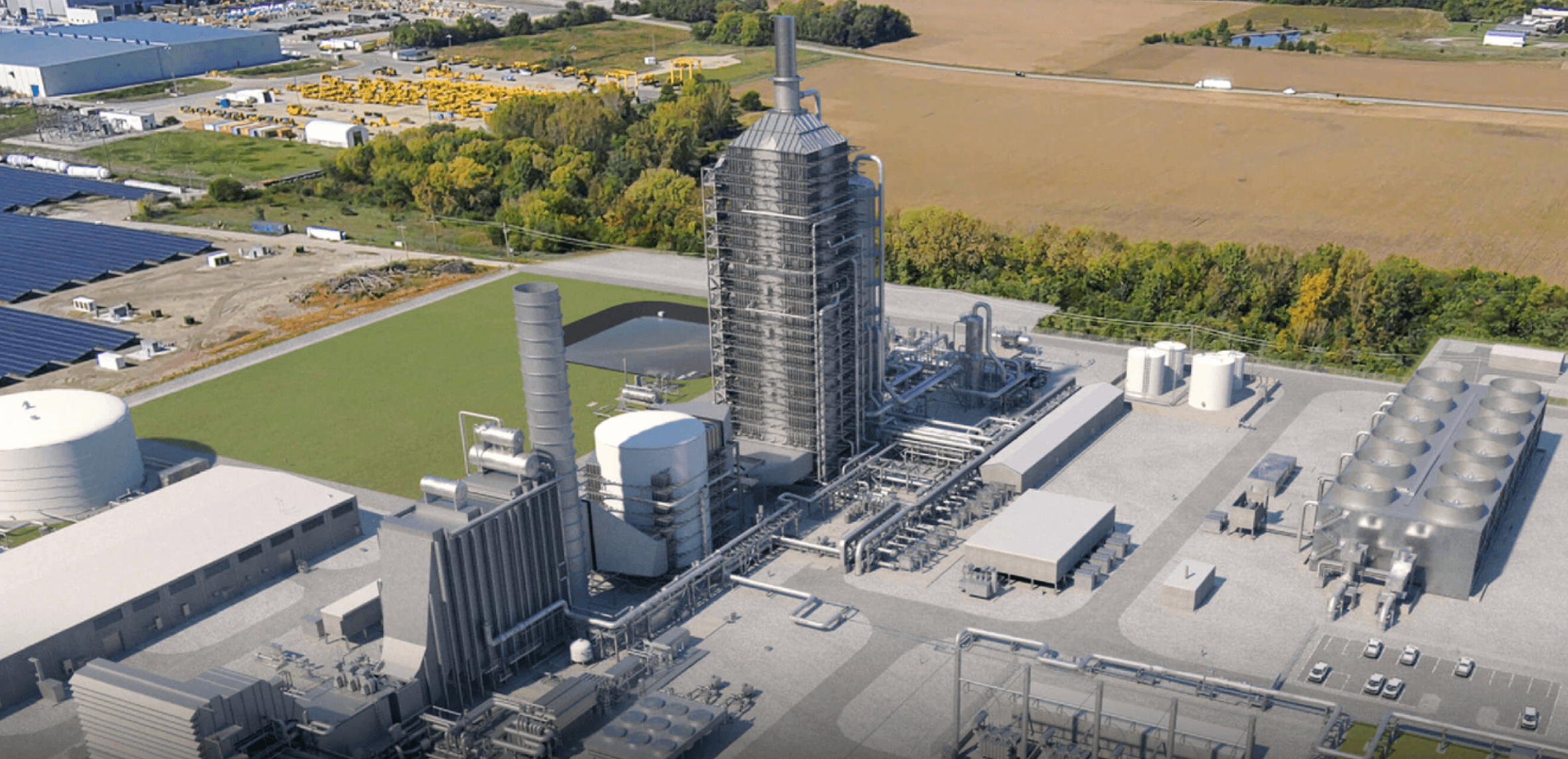
Google has committed to purchasing electricity from the Broadwing Energy Center, a 400‑megawatt combined heat and power facility in Illinois. The plant will supply both electricity to the regional grid and 1.5 million pounds of steam per hour to nearby industrial operations, integrating energy and process efficiency.
This agreement represents one of the first large‑scale U.S. gas plants to deploy carbon capture and storage (CCS) at commercial scale, positioning it as a proof‑of‑concept for future low‑carbon infrastructure.
Carbon Capture and Storage Integration
The facility is designed to capture approximately 90% of its CO₂ emissions, which will be injected into a sequestration site one mile underground. This site has already stored more than 4 million tons of CO₂ since 2011 and can accommodate 2 million tons annually.
By combining proven gas turbine technology with established CCS processes, the project reduces technical risk while demonstrating the scalability of carbon capture in the power sector.
Corporate Energy Strategy
Google’s clean electricity strategy emphasizes diversification across renewables, nuclear, geothermal, and hydro, while also incorporating natural gas with CCS as a transitional low‑carbon option. Through long‑term power purchase agreements and tariff structures, the company is enabling the deployment of advanced energy technologies that might otherwise struggle to reach market scale.
The Illinois project reflects how corporate demand for reliable, low‑carbon power can mobilize private capital and accelerate innovation.
Market and Policy Context
- Rising Demand: U.S. natural gas consumption has reached its highest level in two decades, driven by the rapid expansion of data centers and AI infrastructure.
- Climate Commitments: Corporations face mounting pressure to reconcile energy‑intensive operations with net‑zero pledges. CCS provides a pathway to balance reliability with emissions reduction.
- Technology Economics: CCS is most viable at facilities above 100 MW capacity, where economies of scale improve cost efficiency.
Policy Considerations and Strategic Responses
- Infrastructure Investment: Large‑scale CCS deployment requires expanded pipeline and storage infrastructure, alongside regulatory clarity on long‑term liability.
- Climate Alignment: Policymakers must ensure CCS projects complement, rather than delay, the transition to renewables.
- Corporate Role: Private sector demand can accelerate adoption of advanced technologies, but requires transparent reporting frameworks to maintain credibility.
- Market Instruments: New environmental attribute certificates linked to CCS could play a role similar to renewable energy certificates in corporate climate accounting.
Geopolitical Context
The Illinois carbon capture project must also be viewed within the broader global energy and climate competition. As Europe accelerates its transition away from Russian hydrocarbons and China expands its dominance in clean energy supply chains, the United States is positioning itself as a leader in low‑carbon innovation.
- Strategic Rivalry: Large‑scale CCS deployment strengthens U.S. credibility in international climate negotiations, demonstrating that advanced economies can decarbonize even energy‑intensive sectors.
- Energy Security: By pairing natural gas with CCS, the U.S. reduces reliance on volatile global LNG markets while maintaining reliable baseload power for critical infrastructure, including data centers.
- Technology Leadership: Successful demonstration of CCS at scale provides the U.S. with an exportable model — both in terms of technology and regulatory frameworks — that could shape global standards.
- Corporate Diplomacy: Multinational corporations investing in CCS projects reinforce U.S. soft power, showing how private capital can accelerate climate solutions in ways that complement government policy.
This geopolitical dimension underscores why the Illinois project is more than a corporate energy deal: it is a signal of U.S. intent to remain competitive in the race for climate‑aligned industrial leadership.
Altrom’s Recommendations
For U.S. Policymakers:
- Establish clear regulatory frameworks for CCS storage, liability, and monitoring.
- Support infrastructure build‑out to enable replication of large‑scale CCS projects.
For Industry Leaders:
- Leverage corporate demand to scale CCS and other low‑carbon technologies.
- Integrate CCS into broader decarbonization strategies, ensuring alignment with renewable deployment.
For Energy Markets:
- Develop transparent carbon accounting instruments to track CCS performance.
- Anticipate rising demand for low‑carbon baseload power as AI and digital infrastructure expand.
Assessment and Outlook
The Illinois project demonstrates that carbon capture and storage can be integrated into large‑scale natural gas generation, offering a pragmatic pathway to balance energy security with climate goals. By capturing 90% of emissions and leveraging proven storage capacity, the project provides a proof point for CCS viability in the U.S. power sector.
As corporate energy demand continues to rise, particularly from data centers, CCS will play a critical role in bridging the gap between reliability and decarbonization. The challenge for policymakers and industry alike is to ensure that such projects accelerate rather than delay the broader transition to a sustainable energy system.