Key Summary
- The European Commission has approved a large state-aid package for Poland’s first nuclear power plant at Lubiatowo-Kopalino, unlocking an investment of roughly €42 billion and substantial public financial support.
- The project will deploy three Westinghouse AP1000 reactors with combined capacity of about 3.75 GW, scheduled to begin operating in the second half of the 2030s.
- Poland aims to use the plant as a cornerstone of its coal phase-out and decarbonisation strategy, alongside rapid growth in renewables.
- The decision confirms that well-designed nuclear support schemes are compatible with EU state-aid rules and climate objectives, creating a template for other member states.
- Key risks include cost overruns, schedule delays, political volatility and managing a just transition in coal-dependent regions.
Strategic Context: From Coal Dependency to Low-Carbon Transition
Poland has long been one of the EU’s most coal-dependent power systems, with domestic coal generation dominating electricity supply and shaping national politics, labour markets and regional development. This has driven high emissions and made European climate negotiations particularly sensitive for Warsaw.
In recent years, however, Poland has installed record levels of wind and solar capacity, with renewables accounting for a growing share of power generation. Yet without firm low-carbon baseload, a rapid coal exit would risk higher reliance on imported gas and potential security-of-supply concerns.
Within this context, EU state aid for Poland’s first nuclear power plant is positioned as a structural solution: a technology capable of replacing a large tranche of baseload coal while supporting deeper penetration of variable renewables and meeting EU climate obligations.
Design of the State-Aid Package
The approved support scheme for the state-owned developer Polskie Elektrownie Jądrowe (PEJ) combines several instruments:
- Equity injections from the Polish state, covering a significant share of upfront capital costs.
- State guarantees on project debt, allowing PEJ to borrow at lower interest rates than would otherwise be possible.
- A long-term two-way contract for difference (CfD), stabilising revenues by compensating the operator when market prices fall below a set strike price and paying back when prices rise above it.
The European Commission judged that this combination is necessary and proportionate to enable the project, that it supports EU decarbonisation goals, and that safeguards exist to limit distortions in the internal market. The decision effectively confirms that nuclear projects can qualify for substantial state backing, provided the support is transparent, targeted and time-limited.
Project Profile and Industrial Implications
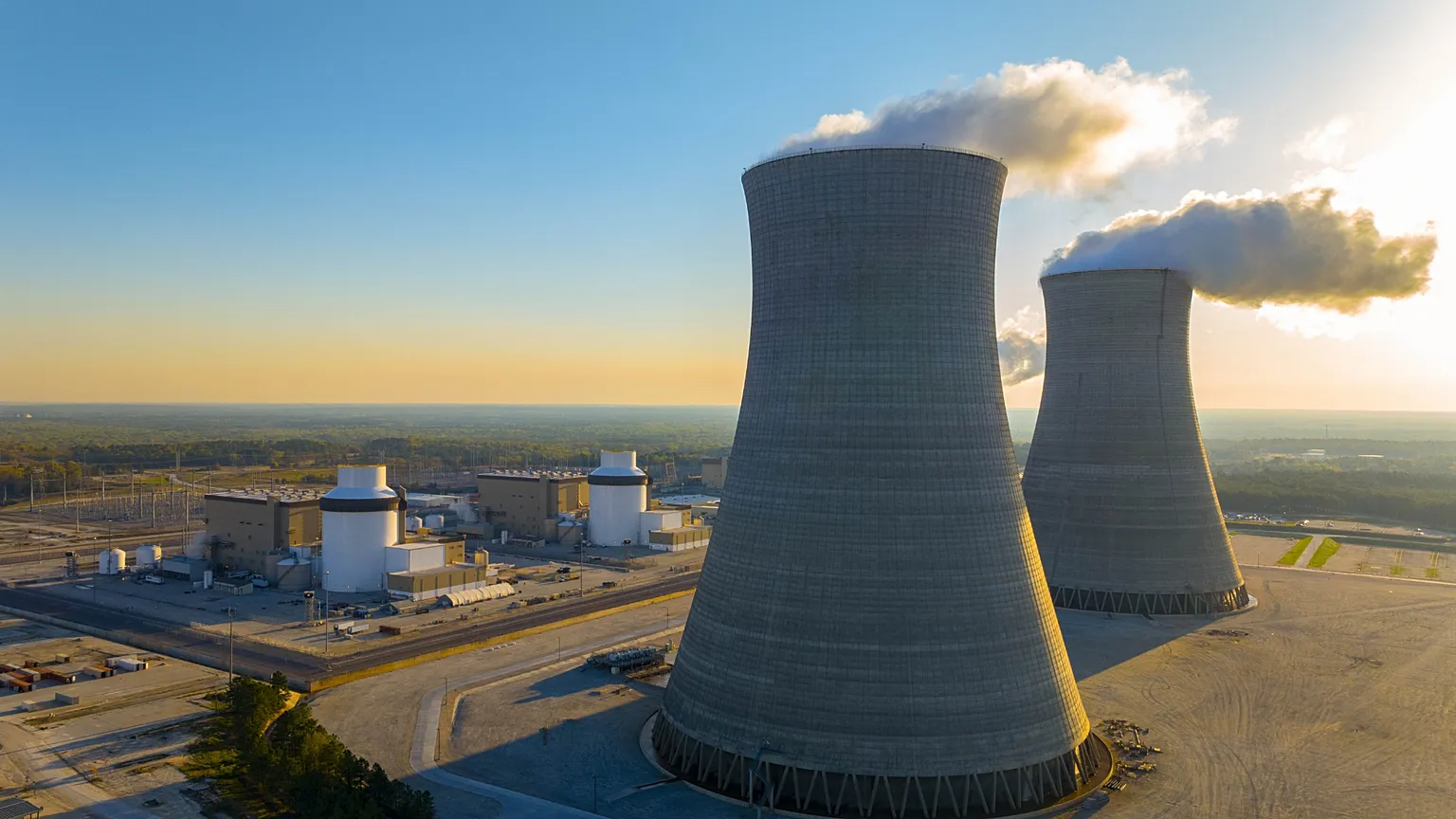
The plant at Lubiatowo-Kopalino on Poland’s Baltic coast will host three AP1000 Generation III+ pressurised-water reactors supplied by Westinghouse, with Bechtel as engineering and construction partner. Once fully operational, the station is expected to provide around one-fifth of current Polish electricity demand, depending on capacity factors and future consumption growth.
Beyond decarbonisation, the project has important industrial and geopolitical dimensions:
- It deepens transatlantic energy and industrial ties, embedding US nuclear technology in a key EU and NATO member.
- It is expected to create high-skilled jobs and stimulate a domestic supply chain in engineering, construction, component manufacturing and long-term maintenance.
- It encourages grid reinforcement and flexibility investments, which will also benefit the integration of offshore wind, onshore wind and solar.
The choice of a single technology and vendor also underscores the need for strong contractual governance, technology-transfer provisions and training to ensure Poland develops its own long-term operational and regulatory capacity.
Impacts on Poland’s Energy Mix and EU Climate Objectives
Once the plant comes online, Poland will be able to retire a significant portion of its ageing coal fleet without compromising system stability. This will:
- Cut greenhouse-gas emissions from the power sector and improve local air quality.
- Reduce structural dependence on fossil fuel imports and exposure to gas-price volatility.
- Create room in the system for higher shares of renewables while maintaining reliability.
At EU level, the project supports broader decarbonisation trajectories by demonstrating how a coal-intensive member state can reposition its energy mix through a combination of nuclear, renewables and interconnections, rather than gas-heavy transition strategies.
Risks, Challenges and Governance Needs
Despite its strategic logic, the project faces several well-known risks:
- Cost and schedule overruns are common in large nuclear builds. Significant overruns would strain public finances and could require renegotiation of CfD terms, affecting consumers and investors.
- Political and regulatory uncertainty over the multi-decade construction and operating period could dampen investor confidence if support for nuclear weakens or climate policy becomes contested.
- Social and regional impacts from coal-sector restructuring will need careful management. Without robust just-transition plans, public support for both climate policy and nuclear investment could erode.
- Technology and supply-chain dependence on a single vendor heightens the importance of investment in domestic expertise, regulatory capacity and diversified suppliers where possible.
Effective governance, transparent communication and close coordination between Warsaw and Brussels will be essential to mitigate these risks.
Policy Implications for the European Union
The Polish case carries wider lessons for EU energy and climate policy:
- It confirms that nuclear can be recognised as a legitimate complement to renewables within EU decarbonisation strategies, especially in systems with high coal dependence.
- It demonstrates how state-aid frameworks can be used to de-risk large low-carbon investments, providing long-term price stability while preserving competition where feasible.
- It underlines the growing integration of energy security considerations into EU climate decisions, particularly in light of Russia’s invasion of Ukraine and the need to reduce exposure to external supply shocks.
- It offers a regulatory template other member states can adapt if they choose to pursue nuclear new-builds or life-extension programmes under EU rules.
Altrom’s Assessment
Altrom assesses that EU state aid for Poland’s first nuclear power plant marks a structural turning point in both Polish and European energy policy. If Warsaw maintains cross-party political backing, strong project management and credible just-transition measures in coal regions, the plant is likely to accelerate Poland’s coal exit, enhance energy security and support achievement of EU climate targets.
For EU institutions, the decision demonstrates that carefully designed support for nuclear can coexist with internal-market principles and high climate ambition. For markets and policymakers, Poland’s experience will serve as a critical test of whether large-scale nuclear can be delivered on time and within budget in today’s European regulatory and financial environment. A successful outcome would strengthen the case for nuclear as part of a diversified, resilient and low-carbon European power system.